Speakers
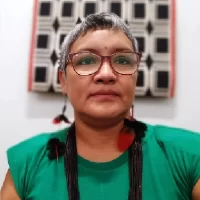
Claudelice Silva Santos
Forest protection activist
Claudelice lost her brother, Zé Claudio Ribeiro, and her sister-in-law, Maria do Espírito Santo, to the greed of those who wanted to cut down the magnificent chestnut trees they were protecting. Thirteen years after her brother took the stage at TEDxAmazônia to denounce the death threats he had been receiving – unfortunately fulfilled – she returns to Manaus to tell her plan to protect the lives of the forest defenders, who are ultimately defenders of the whole world.
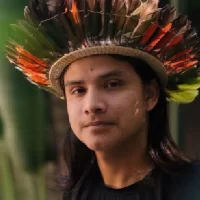
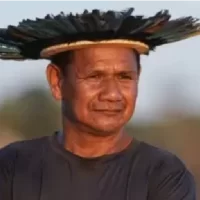
Bitaté Uru Eu Wau Wau
Communicator
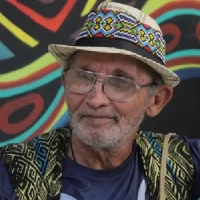
Bitaté became known for leading, at a very young age, an expedition to denounce invaders on the demarcated lands of his people, the Uru Eu Wau Wau, a story told in the film “O Território” (The Territory). He lives in the Jamari village, in the Uru-Eu-Wau-Wau Indigenous Land, in the Amazon forest, in Rondônia. As a leader of the Jupaú people, he is also a photographer and communicator for the Indigenous Media and the Indigenous Youth Movement of Rondônia.
Ana Carla Bruno
Anthropologist
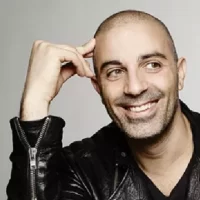
Dror Benshetrit
Futuristic architect
Artist, designer, and inventor based in New York, Dror dreams of cities that grow like natural systems, without waste, without noise, without dirt, where everything nourishes everything. To achieve this, he created Supernature Labs, a research laboratory dedicated to engineering a new logic for urban spaces, with cities that, instead of being organized on grids, germinate as if they were cells. The result is stunning.
Francisco Oro Waram
Councilor for the rights of nature
Vanessa Hasson de Oliveira
Lawyer for the rights of nature
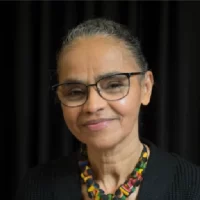
Marina Silva
Minister of Environment and Climate Change
Daughter of the forest and survivor of poverty, Marina was a rubber tapper, domestic worker, and teacher before being recognized worldwide for her fight for the preservation of the Amazon. The only one in her community to be able to study, she eventually became the Minister of the Environment between 2003 and 2008, and implemented forest protection policies that dramatically reduced deforestation. She then ran for the presidency of Brazil three times, advocating for a new productive model in harmony with the planet. In 2023, she resumed the same ministry she had previously led, in a government focused on reconstruction.
Alana Manchineri
Young leadership
Lis Carolina Martínez
Refugee
Part of the vast wave of Venezuelan refugees to the Brazilian Amazon, Lis arrived in Brazil in 2018 with two young children, carrying the story of a growing population seeking new perspectives on life. Trained as a journalist, she worked as a cook in Amazonas to survive. Since 2021, she has been involved in the food industry with “Arepa com Tucumã.” A year earlier, she founded the “Acompañadas Association,” a social project to support single migrant mothers in their personal and professional development.
Bushe Matis
Public Policy Manager
Marcela Bonfim
Photographer
A graduate in Economics from PUC-SP, Marcela considered herself a whitewashed black woman until the age of 25, believing in the discourse of meritocracy and hearing from her parents that if she studied, she would be able to get a good job and be happy. She also criticized affirmative action policies, such as racial quotas, and said they were a demonstration of racism. Everything changed when she arrived in the Amazon, in Porto Velho. From then on, she became an activist for the cause of black populations and traditional peoples, and her perspective was captured by the blackness of the Amazon. She became a photographer, filling a gap in the representation of blackness in the Amazon.
Lucinha Cabral
Singer
Maickson Serrão (Pavulagem)
Creator, riverside dweller
Federico Pardo
Naturalist filmmaker
A biologist, filmmaker, and National Geographic explorer, the Colombian Federico has already won two Emmy awards for his documentary work. Currently, he is dedicated to the Saving Primates project, which seeks to connect Colombians with the country’s most endangered monkeys and support tangible conservation actions. He lives between Colombia, the United States, and wherever his projects take him.
Pedro Vasconcelos
Virologist
Dráulio Araújo
Neuroscientist Physicist
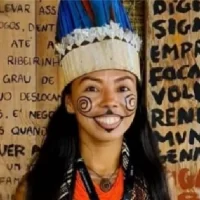
Thaís Kokama
Graphic artist
Descendant of the Kokama and Sateré-Mawé Amazonian ethnic groups, Thaís learned to paint with the chief of the Iambé village, where she moved at the age of 18. There, she began a cultural rescue work. She believes that the graphic art is a form of dialogue between indigenous and non-indigenous peoples. Painting and tribal patterns are an ancient practice, with different meanings in indigenous culture and in the daily life of villages, used in rituals and as a healing tool. They are also a form of communication among indigenous people of different ethnicities, as well as a way to communicate with nature and the supernatural. Graphic art has its own language.
Francisco Bezerra, o Flecha
Forest ranger
Studying, exploring, or even visiting most of the Amazon would be impossible without the “mateiros”: people literate in the language of the forest, capable of reading its signs and communicating with it. Flecha is one of the most legendary among them, carrying out this role by taking scientists deep into the forest for over 30 years. While most people look at the Amazon rainforest and see a vast green expanse, Francisco sees an infinity of relationships, information, resources, and characters.
Izolena Garrido
Artisan and Community Leader
Noemia Kazue Ishikawa
Mycologist
Descendant of Japanese immigrants, Noemia fell in love with fungi under the influence of her grandfather, who loved to cultivate mushrooms. She went to pursue her Ph.D. at Hokkaido University in Japan. Since 2004, she has been a researcher at the National Institute of Amazonian Research (INPA) in Manaus, where she leads the mushroom research group. Noemia is also a science disseminator. In addition to being the author of scientific articles and books, she writes children’s and young adult books, such as “Embaúba: uma árvore, muitas vidas” (2016) and “Brilhos na Floresta” (2019). She also explores flavors: she is a co-author of the book “Ana amopö: cogumelos” and the “Encyclopedia of Yanomami Foods,” which won the Jabuti Prize in the gastronomy category in 2017.
Adnan Demachki
Former mayor of Paragominas
Hannah Balieiro
Socioenvironmental Biologist
Hannah, a forest cabocla, activist, artist, and craftswoman, lives on the Amapá-Pará river bridge. As the executive director of the Mapinguari Institute, she is a biologist by training and builds climate connections from local to global, between popular education in the Amazon territories and political advocacy at UN events. The focus of her work is to reveal the vulnerabilities of indigenous and quilombola areas, which protect the world from climate change but are the ones that suffer the most from it.
Luis Fernando Laranja
Entrepreneur
Laranja, a veterinarian and scientist focused on animals, became an entrepreneur in the Amazon, seeking to build a bridge between Faria Lima, Brazil’s financial center, and the forest. He is one of the pioneers of the B Corp movement in Brazil and the founder of NoCarbon Milk, which brought to market the world’s first certified Organic, Carbon Neutral, and Animal Welfare milk. He thinks deeply about ways to ensure that the tens of millions of cattle already in the Amazon can coexist harmoniously with the forest.
Juliano Assunção
Climate policy economist
Narubia Werreria
Artivist Leadership
Tom Matthews
Climate Scientist
Tom, a National Geographic explorer, climate scientist, and professor at King’s College London, is interested in the social impacts of climate change. This drives him to understand the most extreme climates on the planet. His research leads him to investigate everything from deadly tropical heatwaves to severe windstorms in cold climate mountains, mapping the boundaries of Earth’s climatic envelope and charting the course of change. His work reveals the interdependence between the glaciers of the Andean peaks and the vast Amazon rainforest down below.
Angela Mendes
Socio-environmental Activist
A partner with her father in the courageous struggle to keep their traditional way of life alive, Angela bears the surname of the rubber tapper Chico Mendes, whom she lost to murder when she was a young 19-year-old activist. Chico is a recognized environmental hero worldwide, whose legacy lives on through the Chico Mendes Committee, an activist organization that Angela presides over, and in the dream of creating protected territories where people can produce in harmony with nature.
Celdo Braga
Natural Composer
For over 40 years, the Amazonian Celdo has been creating poetry, singing, and playing the cultural values of the Amazon, translating the beauty of this green world. With the Raízes Caboclas group, the Imbaúba, now the Gaponga, he has recorded more than twenty albums. He also dedicates himself to the craft of a luthier, building what he calls “bioinstruments” from the renewable resources of the living forest.
Beto Veríssimo
Agricultural Engineer
Marcio Sztutman
Socio-environmentalist
With 25 years of experience in the Amazon and other Brazilian biomes, Marcio is a biologist and forest scientist with expertise in environmental conservation, rural development, sustainable agriculture, indigenous peoples, business development, and impact investing. He has worked in the public, private, and third sectors, in technical and leadership positions. He acts as a bridge between traditional populations and the business world to create and accelerate enterprises focused on land use that have the potential to generate positive impact. He dedicates his life to fostering collaboration.
Erika Berenguer
Climate Scientist
A native of Rio de Janeiro and a researcher at the University of Oxford, Erika has focused all her attention on the Amazon for 15 years, spending long periods deep in the jungle, studying the behavior of forests altered by human activity. Her greatest concern is the human-caused fires that alter the entire dynamics of the forest, sometimes in an irreversible way. Erika believes she has the solution.
Hugo Jabini + Wanze Eduards
Human Rights & Tribal Leader
Wanze is a leader of the Saamaka people, a community of descendants of enslaved individuals in the heart of the Surinamese Amazon. Hugo, who also has roots in the forest, helped communities like Wanze’s organize to fight against human rights violations by logging companies. Together, they achieved a historic decision in favor of indigenous and traditional peoples, ensuring control over resource exploitation in their territories. The victory in court was not only for the Saamaka, as the precedent extended to all forest peoples in Suriname.
Txai Macedo
Indigenous and sertanist
Antônio Batista Macêdo, also known as Txai, was born in 1952 in Acre, Brazil. He was a rubber tapper before serving in the Brazilian Army. Later, he became an indigenist and frontiersman, contributing to the demarcation of indigenous lands and the creation of extractive reserves in the region. He actively participated in the struggles of indigenous peoples and traditional populations, such as the rubber tappers. As a result, these peoples freed themselves from their former bosses, the “rubber barons,” and ushered in a new phase of their history.
Maial Kayapó
Activist leadership
Maial is the granddaughter of Chief Raoni Metuktire, one of the most renowned indigenous leaders in the world, and the daughter of Paulinho Paiakan, a historical figure of her people who fought for the inclusion of indigenous rights in the 1988 Constitution. She was the first Kayapó to graduate in law and ventured into politics, inaugurating a new front in the battle for indigenous rights and the protection of the forest.
Elaíze Farias
Journalist
Native of Parintins (AM), Elaíze has indigenous roots and graduated in journalism from the Federal University of Amazonas (UFAM). She has become a reference in reporting on indigenous peoples, traditional communities, and socio-environmental issues. Ten years ago, she co-founded Amazônia Real with Kátia Brasil, an independent and investigative journalism agency that produces in-depth content about Amazonian populations and the impacts of major enterprises on nature. Since then, she has been independently and courageously covering neglected topics involving conflicts of interest between economic power and traditional peoples. She received the Vladimir Herzog Journalism Award in 2022.
Dona Nice
Babassu Coconut Breaker
Maria Nice Machado Costa, better known as Dona Nice do Babaçu, has been working with babassu coconut since childhood, alongside her mother and other women in the community. In 1987, she founded the Interstate Movement of Babaçu Coconut Breakers, an organization that fights for the rights of these women to continue protecting the forest, which now has over 30,000 members nationwide. She was the winner of the Chico Mendes Environmental Award and was recognized by the United Nations Environment Programme (UNEP) as one of the 100 women inspiring the world.
Jander Manauara
Rapper, Community Activist
Rapper, activist, and cultural organizer, Jander from Manaus has been energizing the hip-hop scene in the North for 20 years. He was the visionary behind the Origenas Collective and produces events such as the Sustainable Manaus Turn and the creativity fair of FAS. He is an active agent of transformation, operating within networks across the entire territory of the Legal Amazon.
Valcléia Solidade
Quilombola environmentalist
Originally from the quilombola community of Murumuru in Santarém, Pará, Valcleia is a public manager specialized in innovation and technological diffusion. For nearly 30 years, she has been implementing socio-environmental projects in the Amazon, in partnership with social movements. Currently, she serves as the superintendent of sustainable community development at the Amazonas Sustainable Foundation (FAS).
Francisco D’Elia
Remote sensing geographer
Francisco is a geographer and managing director of Bioverse Group, the first private operation focused on delivering non-timber forest inventory as a service. This service caters to the emerging bioeconomy of non-timber forest products (NTFPs) in the Amazon Basin. In addition to promoting efficiency, these efforts strengthen regional supply chains and empower the communities that inhabit the territory.
Tainá Marajoara
Food activist
Tainá is a chef, cultural producer, curator, teacher, and thinker, descended from the Aruã Marajoara people of Pará. She is one of the leading voices in the fight for the preservation of Brazilian and indigenous food culture, against what she calls “neoliberal gastronomy.” The chef speaks about food sovereignty to ensure that traditional peoples have their cultural practices respected and to protect genetic heritage.
Vitória Pinheiro
Climate activist
Climate activist, communicator, and transgender entrepreneur from the black and indigenous community of Zumbi dos Palmares, in the outskirts of Manaus, Vitória is the director of Palmares LAB Ação and PerifaConnection. The first in her family of riverside dwellers to attend university, she was a young delegate from Brazil at COP26 and COP27 and is currently the Regional Focal Point for the Latin America and Caribbean (LAC) Region at CYCSC, an official UN constituent for sustainable communities that promotes youth engagement in multilateral governance and decision-making spaces. She is also a Young Leader of the European Commission on Climate and Energy.
Ellen Fernandes
Singer
Singer, songwriter, ethnomusicologist, social scientist, and art entrepreneur from Manaus, Ellen dedicates her life to the valorization of art as an instrument of social transformation. Alongside her own musical work – she released the album “Batelão da Amazônia” in 2020, deeply rooted in the cultural tradition of the region – she has been involved in promoting and highlighting the cultural, symbolic, and natural richness of the rainforest. She is also a co-owner of the cultural space and music school Casa Som Amazônia in Manaus, which serves as a reference point for Amazonian culture.
Valéria Paye Pereira
Social scientist
Originária da terra indígena Parque do Tumucumaque, entre Pará e Amapá, Valéria é cientista social e dirigente importante do movimento indígena. Foi responsável pela articulação do movimento indígena amazônico com as outras regiões do país e pelo diálogo com representantes do governo e dos outros poderes sediados em Brasília. Participou da fundação da Articulação dos Povos Indígenas do Brasil (APIB) e da organização dos vários Acampamentos Terra Livre.
Vanda Witoto
Health professional
Hailing from the indigenous land of Parque do Tumucumaque, between Pará and Amapá, Valéria is a social scientist and an important leader in the indigenous movement. She has been responsible for coordinating the Amazonian indigenous movement with other regions of the country and for engaging in dialogue with government representatives and other authorities based in Brasília. She was involved in the founding of the Articulation of Indigenous Peoples of Brazil (APIB) and in the organization of various Terra Livre Camps.
Laurent Troost
Urbanist Architect
Laurent Troost is a Belgian architect based in Manaus since 2008. He is the co-founder of an artistic residency platform in the Amazon called “Labverde” and of two architecture firms (“Laurent Troost Architectures” and “Troost + Pessoa Architects”). In addition to his practice, Laurent also served as Director of Urban Planning for the Municipality of Manaus from 2013 to 2020 and has since worked as a consultant for the World Bank Group.
Expandir horizontes. Convergir histórias. Ecoar causas e unir vozes.
Com a aceleração das alterações climáticas e as ameaças ao bioma amazônico, é urgente retomar o diálogo e o foco para essa discussão. Por isso o TEDxAmazônia 2023 faz parte de uma iniciativa global do TED pelas mudanças climáticas.